junk removal near me upsers portal
There was a hallway closet I opened maybe twice a year. Not because I needed anything inside—it had been years since anything in there was useful. I opened it out of habit, the way you check a door you already know is locked. The clutter had settled into the architecture of the house so completely that I stopped seeing it. It became texture. Background. Something the eye edited out before the mind could register it.
That is the strange part about accumulation: it does not announce itself. It arrives in small increments—a box from a move, a bag of cables, a stack of papers that felt important once and then simply stayed. Each addition was minor. The whole, over time, was not.
I Walked Past It For Years
The shelf by the back door held things I could not name without lifting them. I walked past it every morning on the way to make coffee. The objects did not obstruct anything. They did not smell. They did not make noise. They existed in a kind of visual silence that only broke when a guest asked what was in the blue tote and I realized I had no answer.
I think familiarity works like a filter. The brain learns what to ignore in order to move through a space efficiently. The shelf became part of the wall in my perception—not furniture holding things, but simply there, like the color of the paint or the grain of the floorboards.
What surprised me was not the volume of what had collected, but the duration. Some of those items had been in the same position for six, maybe seven years. They had outlasted jobs, relationships, even the version of myself that put them there. And yet I passed them daily without acknowledgment, as if time had folded them into the room's permanent fixtures.
The Objects Stopped Feeling Temporary
Everything on that shelf had arrived with a temporary intention. The box labeled "misc" was supposed to be sorted within a week. The broken lamp was waiting for a repair that never came. The stack of magazines belonged to a subscription I cancelled in 2019 but never fully released from the house.
At some point, temporary becomes a category that no longer applies. The objects graduate into permanence not because anyone decided to keep them, but because no one decided to remove them. Inaction, repeated daily, becomes a kind of decision in itself—quieter, less visible, but equally binding.
I noticed this most clearly with a cardboard box from my first apartment. It had followed me through three moves. I never opened it. I did not know what was inside, but I also never questioned whether it should come along. It had simply become part of my inventory of belongings, unexamined and unchallenged, like a scar you stop noticing until someone else points to it.
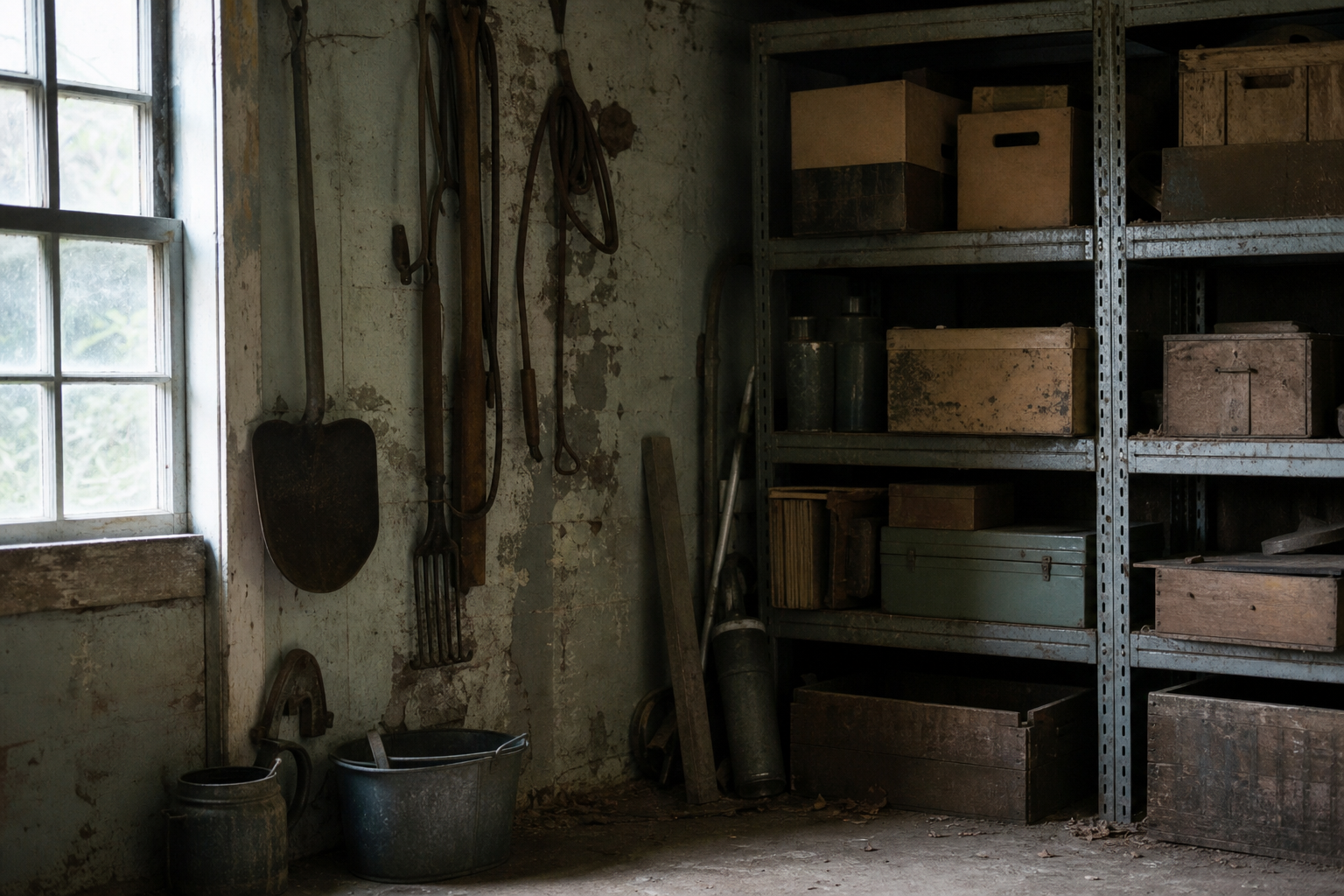
Some spaces become invisible simply because we see them every day.
The Moment I Searched For Junk Removal Near Me Upsers Portal
It was not a dramatic moment. I was sitting at the kitchen table on a Tuesday evening, laptop open, not really looking for anything in particular. The closet had been on my mind for weeks—not urgently, but persistently, the way a faint sound in another room eventually demands attention.
I typed junk removal near me upsers portal into the search bar almost without thinking. The phrase arrived from some intersection of memory and impulse—I had seen it somewhere, perhaps in a forum thread about warehouse logistics, perhaps in a note I had saved and forgotten. It was not a service inquiry. It was more like reaching for a word I half-remembered, hoping it might help me name what I was actually looking at.
What I found was not a company or a price list. It was a reminder that other people had stood in similar rooms, facing similar shelves, asking similar questions—not about hauling, but about why things accumulate and what it means to finally see them. The search became a turning point not because it solved anything, but because it made the invisible visible. I closed the laptop and walked to the closet. For the first time in years, I really looked at it.
Every Item Seemed To Belong To A Different Version Of Me
When I finally began sorting, each object carried a timestamp I could feel but not always read. The hiking boots belonged to a summer I never took the trip. The framed certificate was from a course I completed but never referenced again. The set of wine glasses was a gift from someone whose name I hesitated to recall.
None of these things were worthless. That was the difficulty. They were not garbage—they were fragments of former selves, compressed into physical form and stored in a closet because letting go felt like erasing a chapter rather than closing one.
I sat on the floor for a long time holding a paperback I had read twice and annotated in the margins. The handwriting in the margins was mine, but from a person who worried about different things, who underlined different sentences. Keeping the book felt like keeping that person close. Letting it go felt like admitting they were gone.
The Space Felt Different Afterward
I did not empty the closet completely. That was never the goal. But I removed enough that the shelf breathed again—you could see the wall behind it, the grain of the wood, the small nail hole from something hung years ago. The room did not look renovated. It looked remembered.
What changed was not the square footage but the quality of attention the space received. The hallway felt wider, not because it was, but because my eyes no longer edited out a section of it. I noticed the light differently. I noticed the silence differently. Empty space, I learned, has its own weight—it is not absence but presence of another kind.
I still do not know if I made the right choices about what stayed and what left. Some items I set aside remain in a smaller box, waiting for a decision I have not yet reached. That feels honest. Resolution, I am beginning to understand, is not always the point. Sometimes the work is simply learning to see what was always there.
Notes I Kept Returning To
What Still Remains
- The closet is not empty, and I am not sure I want it to be.
- Some objects lost their stories before I found the courage to ask.
- I still walk slower past the back door shelf than I used to.
- Letting go and forgetting are not the same act, though they can look alike.
- The house sounds different when there is less to absorb the echo.
- I have started noticing other corners I have been editing out for years.
- Keeping something does not mean you still want it—it sometimes means you have not decided yet.
- The search that started all of this led nowhere useful and everywhere necessary.